Imagining Andersonville
During the Civil War both the Union and the Confederacy maintained large prisons to house thousands of soldiers captured in combat. Life in all of them was hard: the number of men who died in them in some cases rivaled or even exceeded the number of men lost in battles. Among the prison pens one became notorious for extreme brutality: Andersonville, a Confederate prison in southwest Georgia, about 125 miles below Atlanta. It operated from February of 1864 to May of 1865. Built to accommodate 10,000 men, it at one time held nearly 33,000—13,000 of whom perished there. Walt Whitman considered its existence the “the blackest and loathsomest” chapter of the War. “Not Dante’s pictured hell,” he wrote, “and all its woes, its degradations, filthy torments excell’d” Andersonville. Americans in the nineteenth century were as shocked to see images of its emaciated survivors and the deplorable conditions in which they lived as Americans in the twentieth century were to see photographs of emaciated survivors of the Holocaust and the death camps in which they suffered. When Whitman saw returning Union prisoners disembarking from a ship in Annapolis, Maryland, he wondered if they were not “mummied, dwindled corpses.” “They lay there,” he wrote, “most of them, quite still, but with a horrible look in their eyes and skinny lips (often with not enough flesh on the lips to cover their teeth.) Probably no more appalling sight was ever seen on this earth.”I had long been aware of Andersonville but had not considered it or other Civil War prison sites as photographic subjects until Fitzhugh Brundage, the William B. Umstead Distinguished Professor of History at the University of North Carolina at Chapel Hill, suggested that they might make a compelling documentary project. I had met Professor Brundage when he was a fellow at the National Humanities Center where I was on the staff. Civil War prisons were much on his mind as he was making final preparations for the publication of A Fate Worse than Hell, a detailed study of how the military prison camps of the Civil War were run by the captors and experienced by the captives. It was published in the winter of 2026 to highly favorable reviews. At the time I was wrapping up one photography project and was looking for another. The idea of photographing Civil War prison sites appealed to me, but, as I soon discovered, few traces of them remain. In many instances I would have been aiming my camera at nothing more than a historical marker or an intersection. But then there was Andersonville, “preserved” by an act of Congress in 1970. I knew I did not want to present it in the straightforward “this-is-what-the-place-looks-like-now” style of conventional documentaries. I wanted to evoke something of its terrible past. But could its past be rendered in photographs? How could one reimagine the past in the contemporary moment? Furthermore, I wondered how such a sinister place could be commemorated, especially today when so many are trying to erase the darker chapters of American history.For inspiration I turned to the Civil War battlefield photographs of Sally Mann and Dawoud Bey’s images of the landscapes of slavery. With their work in mind, I traveled to Andersonville, and on a steamy September morning in 2025 I found myself kneeling amidst tall weeds, swatting away gnats while peering through a sweat-fogged viewfinder, trying to frame a shot of the faux stockade at the Andersonville National Historic Site.How did Andersonville become the deadliest military prison of the Civil War?When the War began neither the Union nor the Confederacy thought it would spend years housing, feeding, and otherwise caring for tens of thousands of prisoners. Both sides knew that, as in all wars, captives would be taken, but both sides believed that their numbers would be small and that they would have to hold them for only a short time because each side believed it would triumph in a matter of months. Furthermore, thanks to a prisoner exchange program, Union prisoners held by the Confederacy were shipped north, while Confederate prisoners held by the Union were shipped south. An agreed-upon set of rules prevented returned soldiers from rejoining the fight right away, so for a while the prisoner issue remained on the sidelines while combat raged on the battlefields.Things changed in 1863 when the Union began to send Black troops to the front. Confederate forces, upon capturing them, would either execute or enslave them, but by no means would they exchange them, for to exchange a Black soldier for a white soldier would imply that they were equal and would thus undermine the foundational premise of the South’s slave society. The Confederacy also announced that captured white Union officers who commanded Black soldiers would be executed on the charge of fomenting slave rebellion. In response, the Union abandoned the exchange program, for to accept the exclusion of Black soldiers from it would imply that Black and white soldiers were not equal and would thus undermine the foundational premise of the Union, that all men are created equal.With the end of the exchange program the number of prisoners quickly increased on both sides, and both scrambled to find places to hold them. The Confederacy confined thousands of its captives in its capitol, Richmond, Virginia. Eventually, however, the prison burden became too much for the city to bear, forcing Confederate officials to establish new prisons elsewhere.They decided to build a large camp near the small town of Andersonville, Georgia. It was remote, unthreatened by Union armies, and on a railroad line, making it a convenient destination for the freight cars crowded with prisoners that would eventually head its way. Construction began in January of 1864. Enslaved laborers cleared a 16-acre tract and surrounded it with a tight stockade of thick planks 15 feet high, topped at regular intervals with guard posts. In time 10 acres were added, and the original stockade was surrounded by another to deter escapes by tunneling. Throughout the prison a no-man’s land, 19 feet wide, ran along the interior of the stockade. It was bounded by a simple fence known as the dead line, so called because if a prisoner crossed it for whatever reason, he would be immediately shot by a guard.Life in Andersonville was nasty, brutish, and in many cases very short. Rations were meager and often rancid, contaminated, or withheld. Starvation was a common cause of death. Diseases like scurvy and dysentery were rampant, medical care virtually nonexistent. A spring flowed through the prison, the only source of water for drinking, cooking, and bathing. It ran to a marsh that served as the latrine, which the prisoners called “the sinks.” Soon the marsh became a fecal swamp from which emanated a noxious, ever-present stench that pervaded the entire camp.The Confederacy made no provisions to house the prisoners. They had to fashion hovels, which they called shebangs, from whatever they carried into the prison when captured and whatever they could scavenge once there. Some dug holes and lived in them like animals in burrows. Often prisoners themselves added to the misery by plundering the meager possessions of the sick and weak. At one point over 100 men died each day. Their bodies were dumped in trenches in a nearby burial ground, which was dedicated as a national cemetery in 1865. Was all this suffering due to the malevolence of Andersonville’s overseers? Or did the Confederacy not have the resources to build and operate humane prisons? Or was it simply the result of bureaucratic ineptitude? Probably all three.Whatever the reason, for his part in the Andersonville nightmare the camp’s commander Captain Henry Wirz was tried for war crimes. Convicted, he was hung in Washington, D.C. on November 10, 1865.It is difficult, if not impossible, for visitors to the Andersonville site today to connect imaginatively or emotionally with its tragic past. A road encircles the grounds, allowing tourists to view from the comfort of their cars the rolling hills where prisoners baked in summer and froze in winter. The barren clay upon which they crawled—hard brick when dry, glutenous mud when wet— is today verdant with weeds and grass. The spring is still there, and it still flows into a marsh where now the threat is not dysentery but snakes. The stockade is an abstraction, invisible and unfelt, as its location is marked only by a few stone columns paralleled by white posts that suggest the presence of the dead line. A museum offers some insight into Andersonville’s past but subsumes its story in the broad history of prisoner-of-war camps in general.If the prison site itself does not carry Andersonville to the heart, the adjacent national cemetery does. There visitors see what appear to be endless fields of tombstones, ranked row upon row upon row in strict military order, what Whitman called “the infinite dead.” Thirteen thousand ceases to be a statistic, and we realize just how death-haunted those rolling verdant hills are. And we also understand why Whitman characterized Andersonville as “a dead and living burial pit.”I wanted my photographs to enable viewers to feel Andersonville’s past in the present, to sense the emotional impact of imprisonment there. Struggling to find a way to do that, I was reminded of a passage in Let Us Now Praise Famous Men, a meditation on the lives of Alabama tenant farmers during the Great Depression by writer James Agee and photographer Walker Evans, published in 1941. In the passage Agee vents a frustration similar to my own. He and Evans were on assignment for Fortune magazine, which expected them to produce an article suitable for the sensibilities of its well-heeled readers, but Agee was so moved by his encounter with the tenant families that he felt he could not tell the truth about their lives within the strictures of conventional journalism. If I could do it, I’d do no writing at all here. It would be photographs; the rest would be fragments of cloth, bits of cotton, lumps of earth, records of speech, pieces of wood and iron, phials of odor, plates of food and of excrement. . . . A piece of the body torn out by the roots might be more to the point.Such an approach is precisely what is needed to tell the story of Andersonville, but Agee could not tell his Alabama story that way, and I could not tell Andersonville’s story with “fragments of cloth, bits of cotton,” and so on. However, I did have photographs. Back home studying dozens of them, I realized that the National Park Service, which oversees the historic site, may have given me a way to do what I wanted to, at least to some extent. To provide visitors more to look at than acres of unremarkable landscape, the Service reconstructed two sections of the Andersonville stockade, the north gate and the northeast corner, both complete with guard towers and dead lines. The north gate is actually two gates, an exterior one that opens into a holding pen where prisoners were marshaled before entering or leaving the camp and an interior one that connects the holding pen with the prison grounds. When the interior gate swung open, newly arrived prisoners got their first look at the hellscape beyond the dead line. Into the northeast corner the Service tucked a dozen or mocked-up shebangs. Although the stockade reconstructions are sanitized, truncated versions of the real thing, I realized that, used imaginatively, they could suggest the essence of Andersonville. Towering and sinister, the real stockade loomed menacingly over every second of the prisoners’ lives. It trapped them in their Golgotha and smothered their hopes. Approaching it meant certain death. In short, the stockade was the essence of Andersonville. Trying to envision the real thing called up what for me was a surprisingly unexpected association: T.S. Eliot’s description of the Mississippi River in his poem “The Dry Salvages.” Eliot called the river “a strong brown god.” The real stockade was a sort of god, wasn’t it? Not a benevolent god, to be sure, it was more like an ancient deity, indifferent to the suffering of mortals. It controlled the fate of the men within its grip. It existed in the landscape as, according to Eliot, the river does, “sullen . . . and intractable.” In depictions of Andersonville from the nineteenth century on, the stockade is evident, often in the background, but somewhere to be seen, so present, yet so taken for granted, it was easy to overlook, “almost forgotten,” as Eliot says of the river. I wanted my photographs to “remember” the stockade, to remind us that it was always a lethal presence “waiting, watching, and waiting.”Use the arrows next to the images to scroll through the portfolio.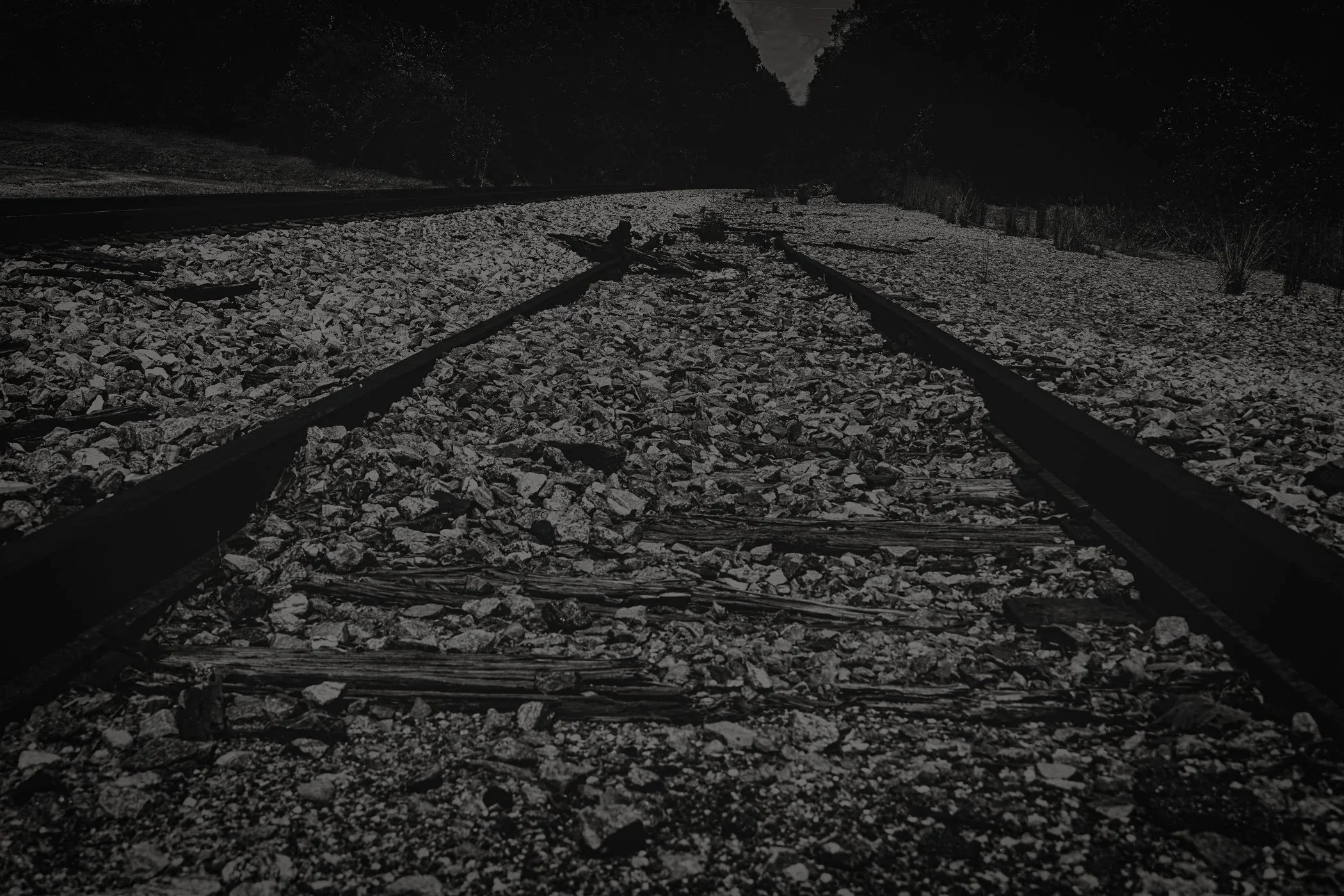
Tracks at the Town of Andersonville
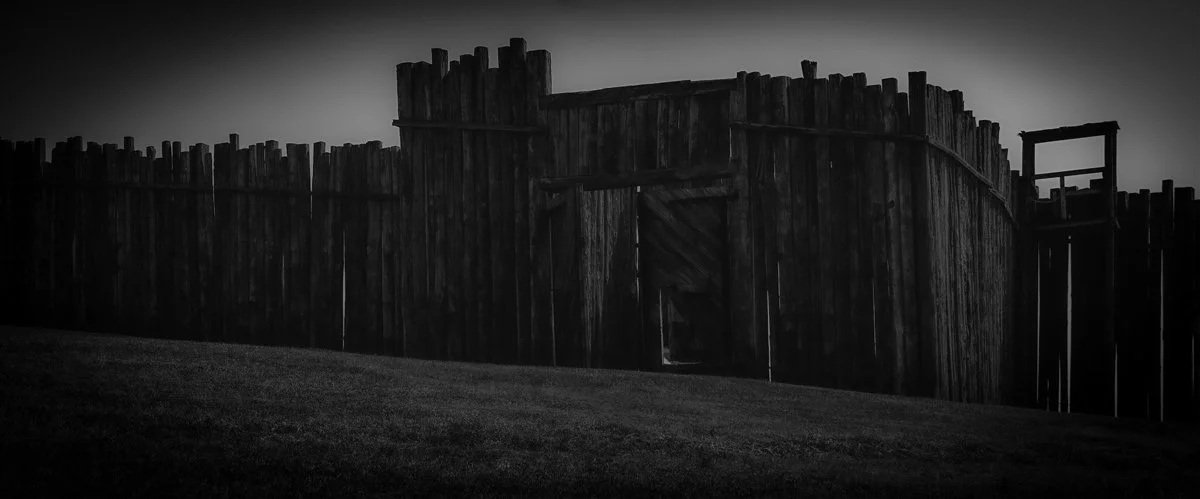
North Gate
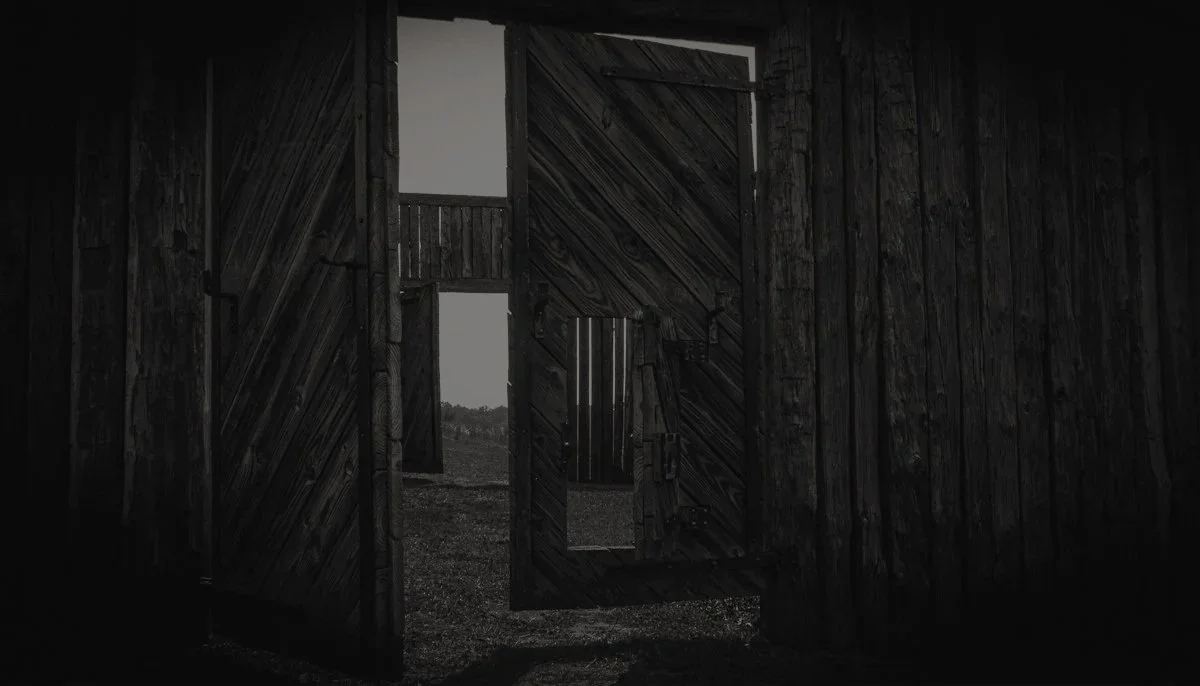
Enter
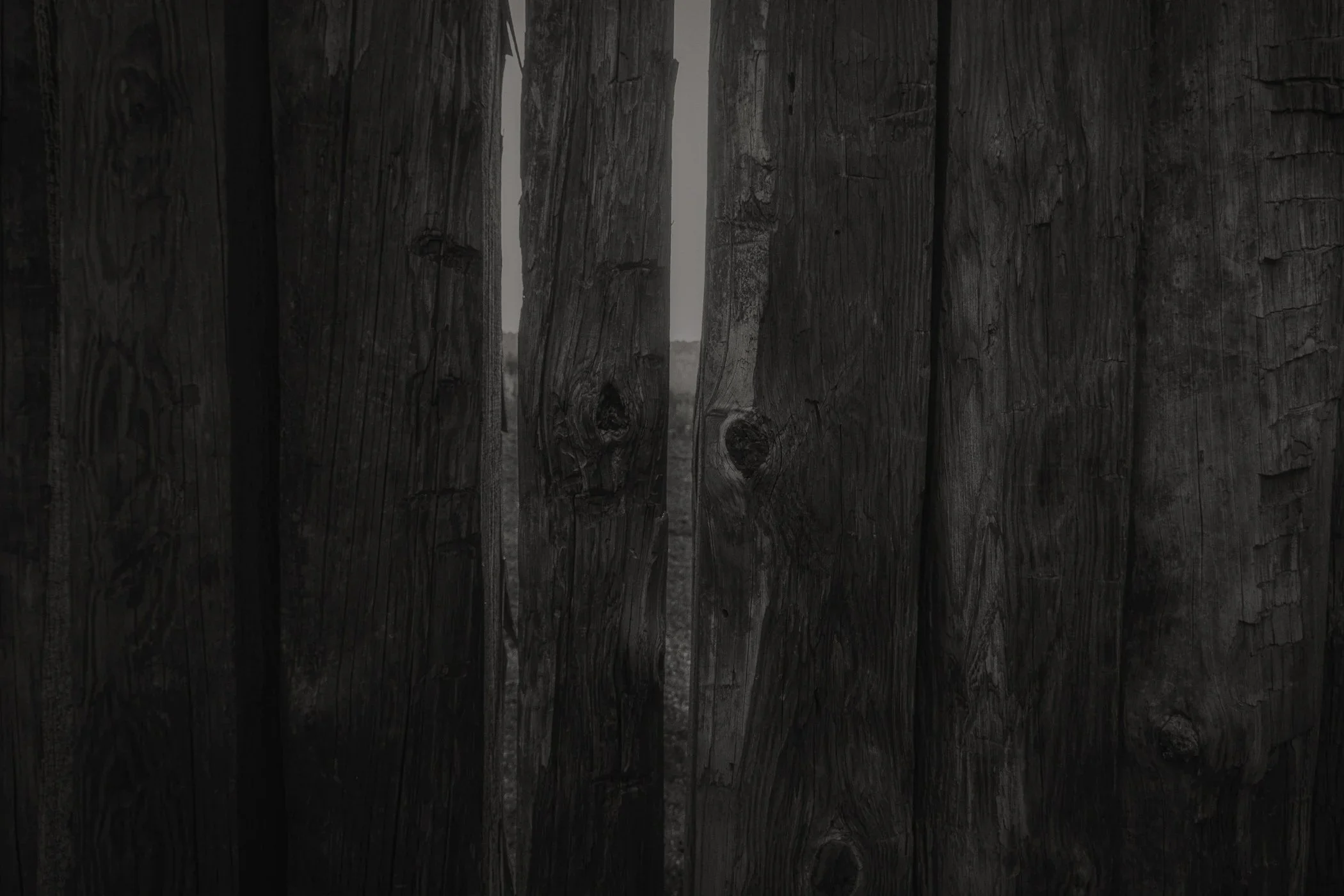
Last Glimpse of Freedom
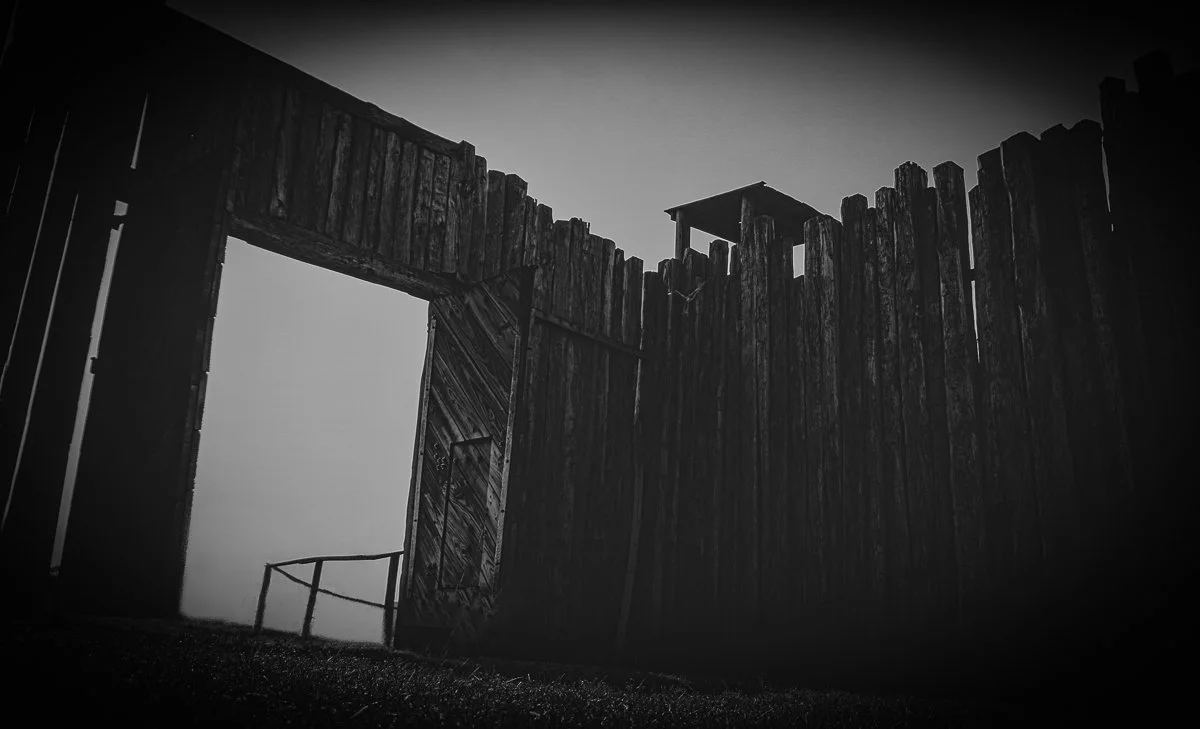
Into the Prison
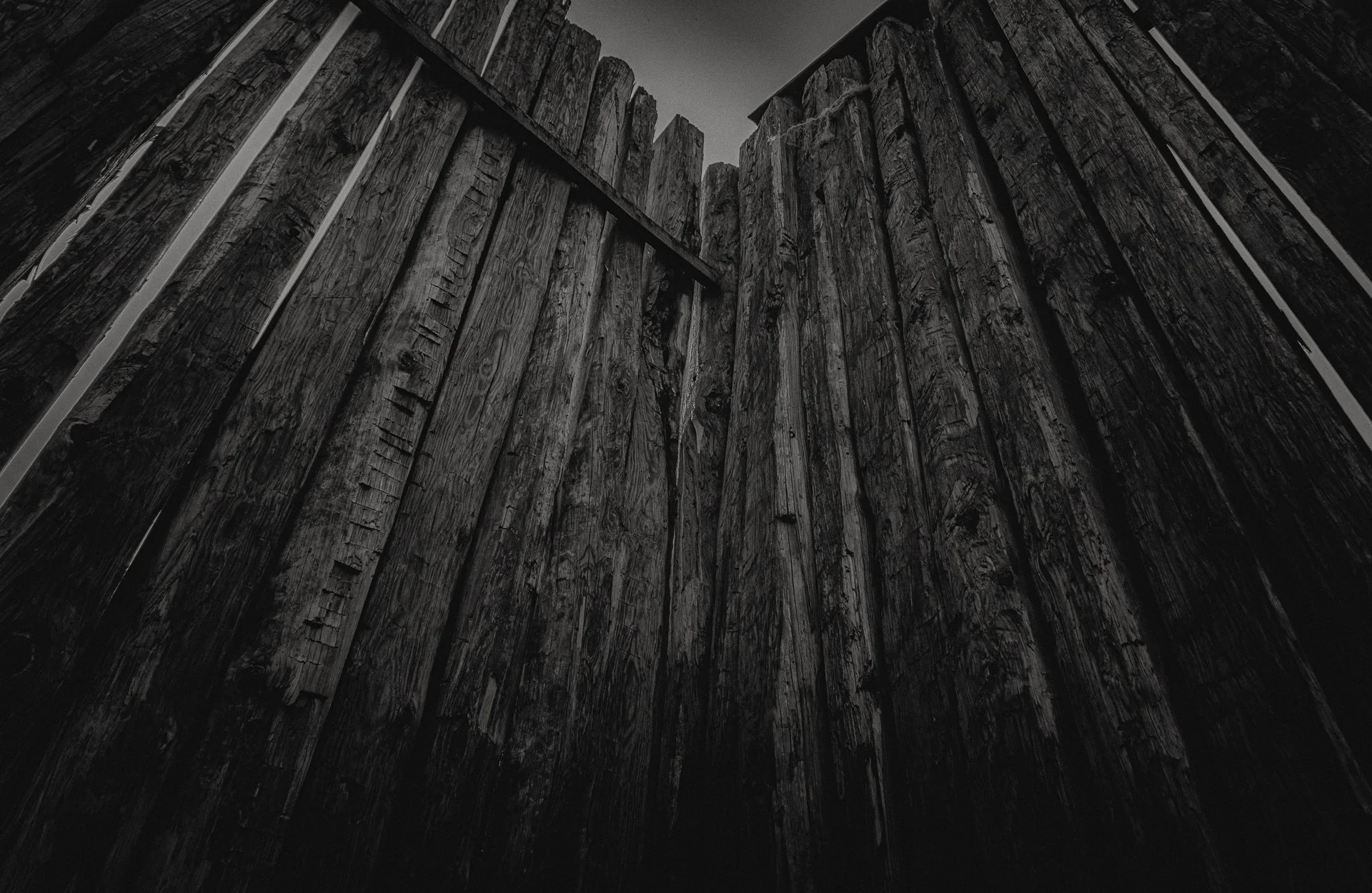
Stockade
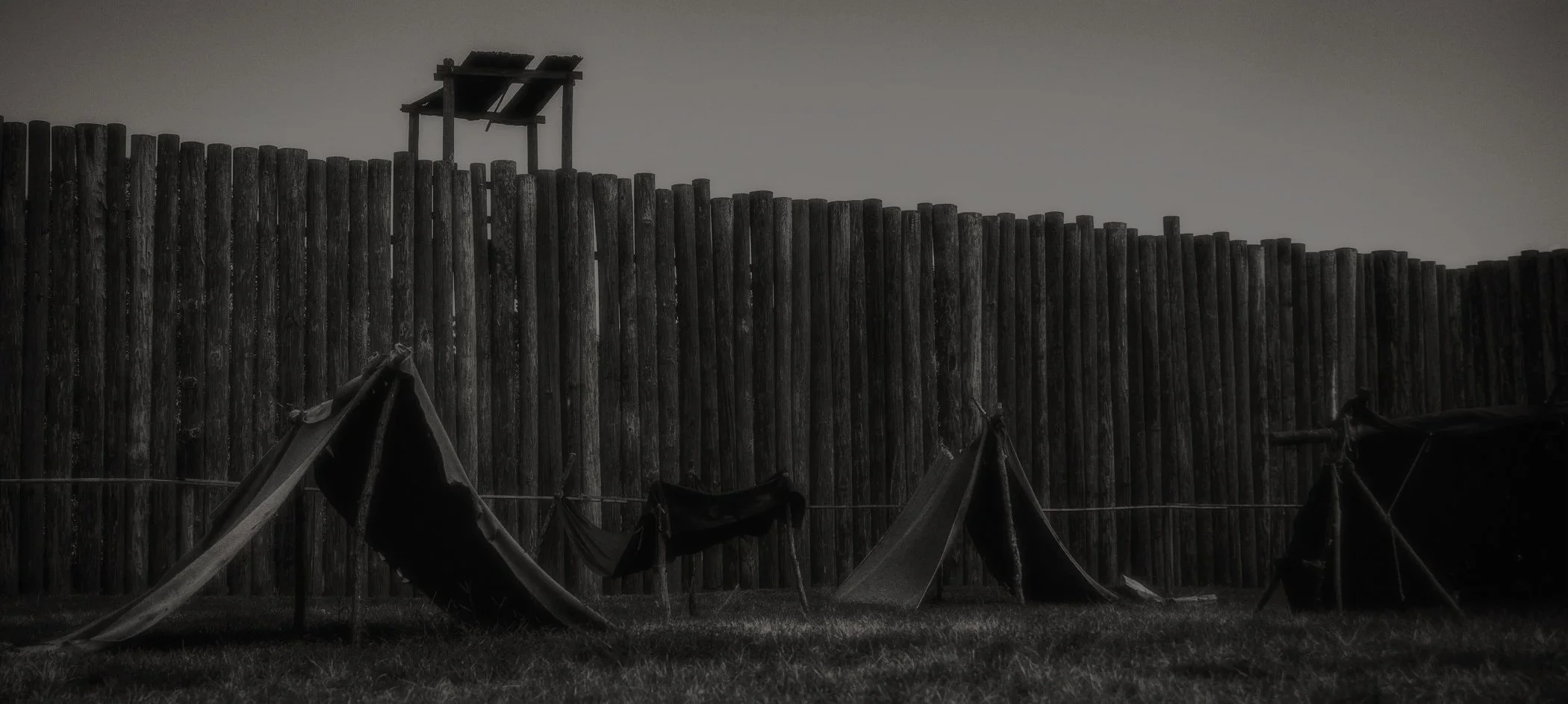
Shebangs and Guard Tower
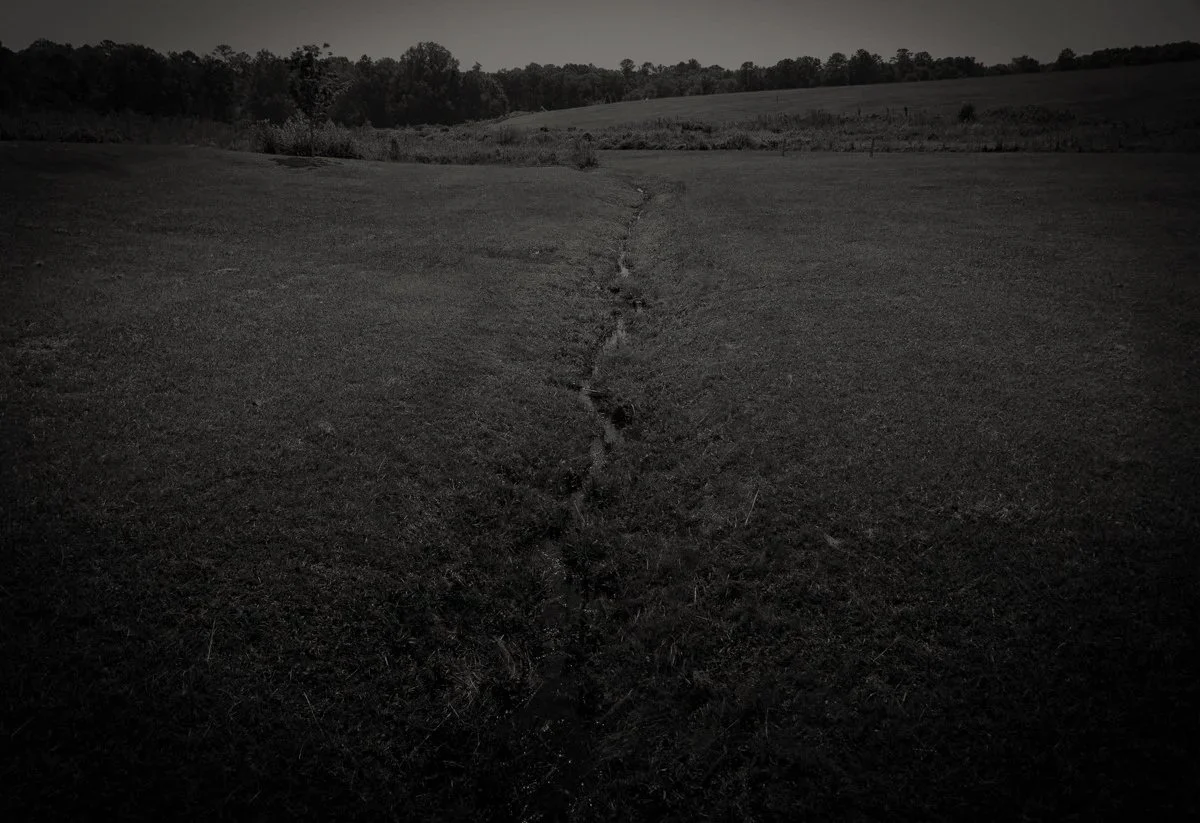
The Spring
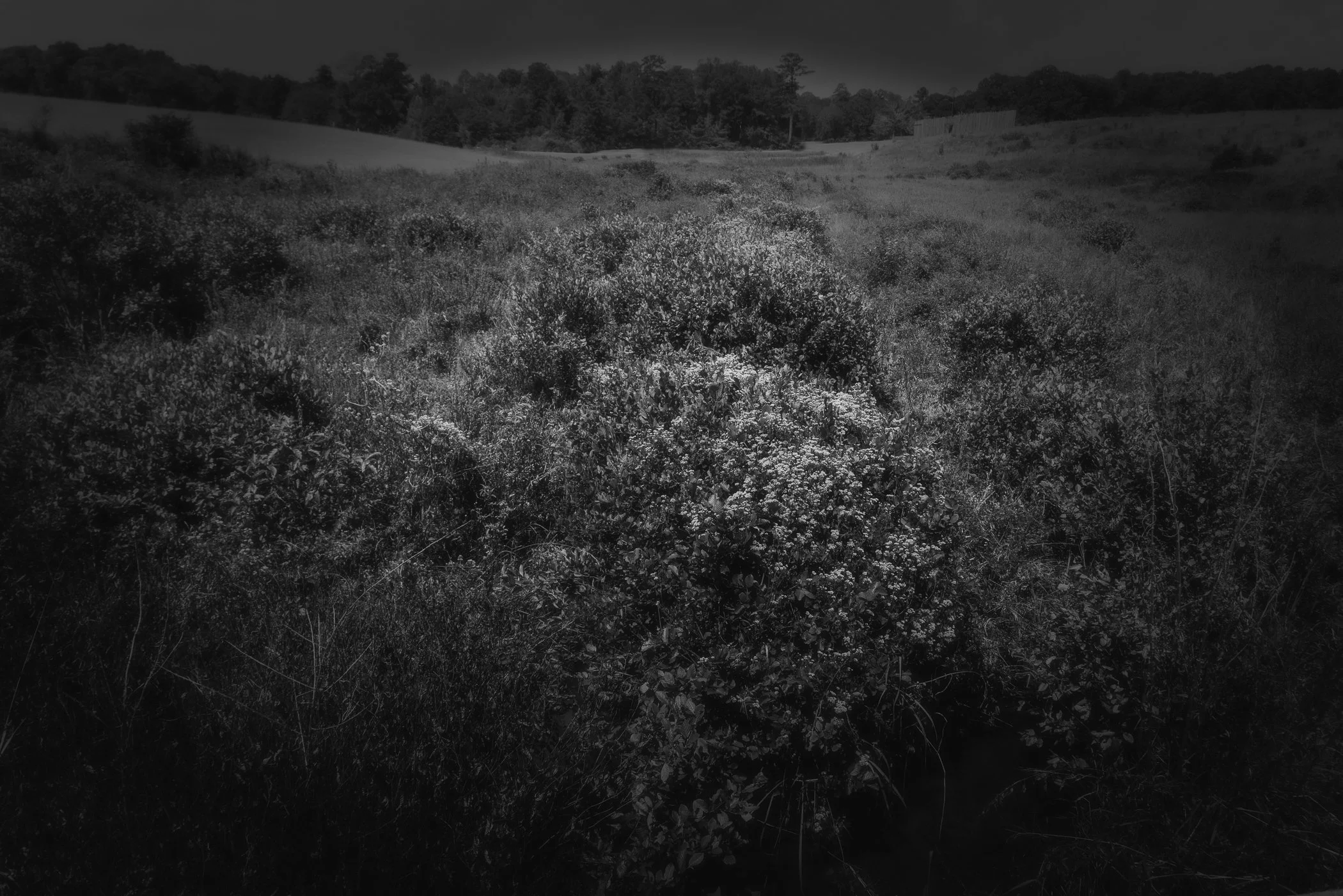
The Sinks
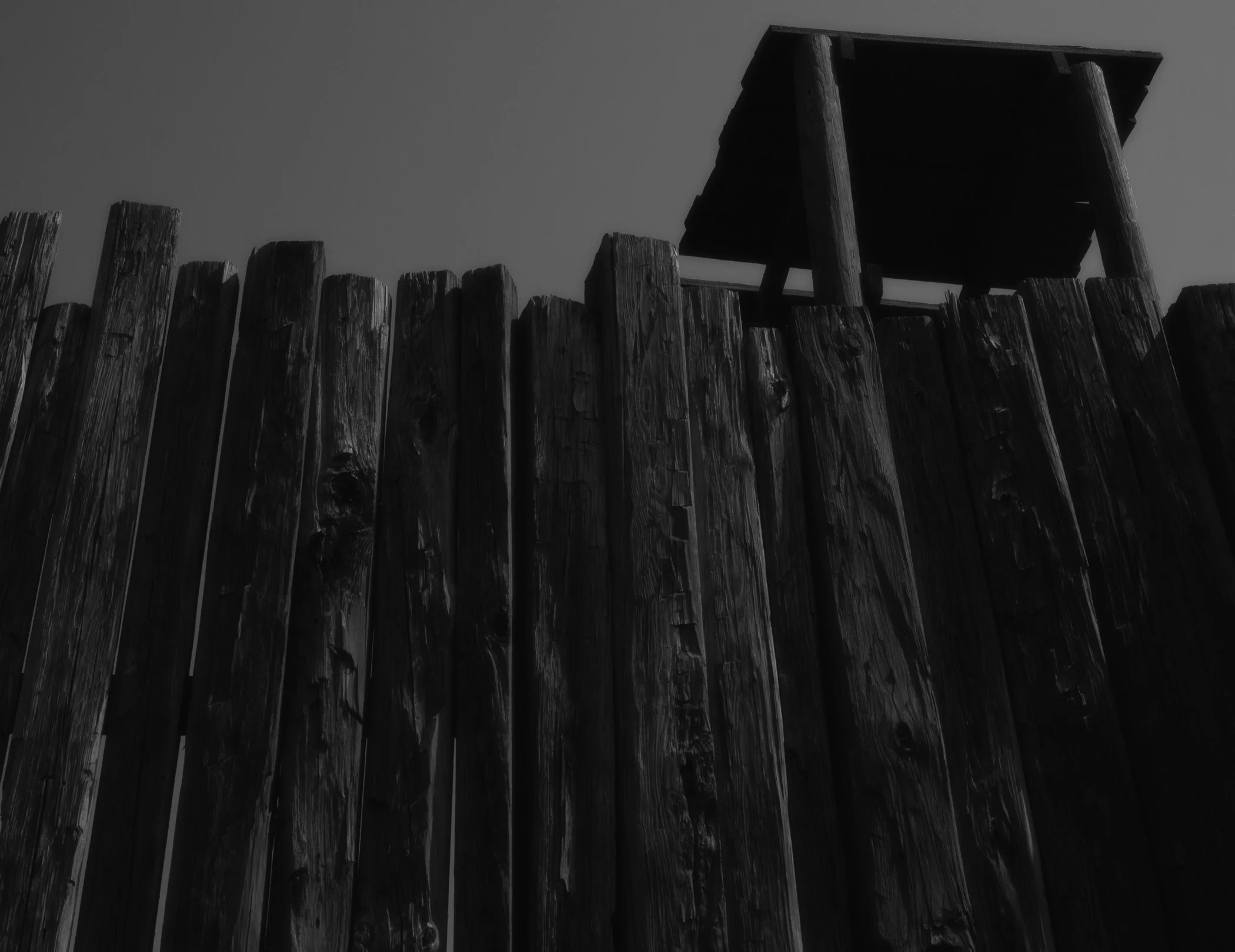
Watching
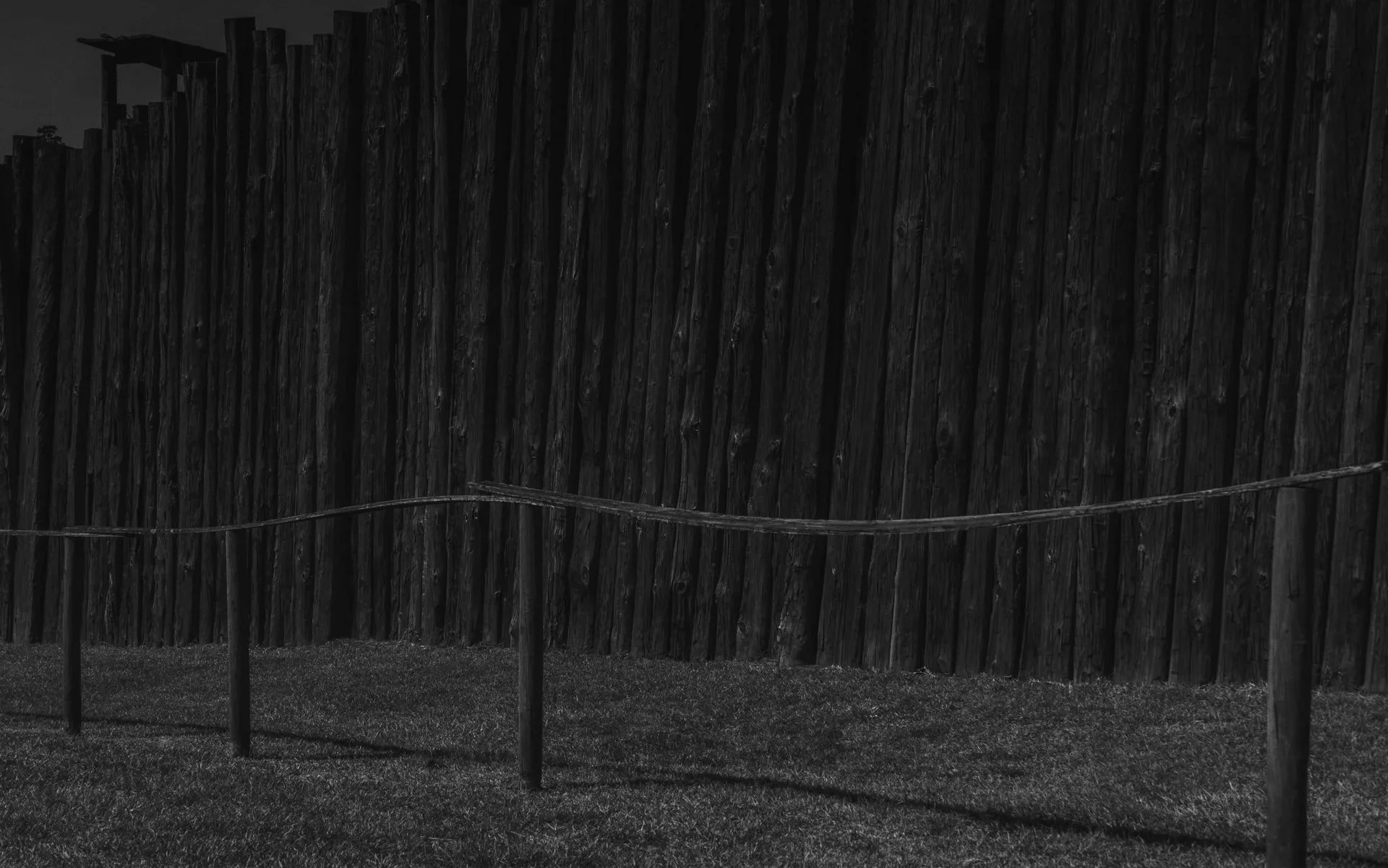
The Deadline
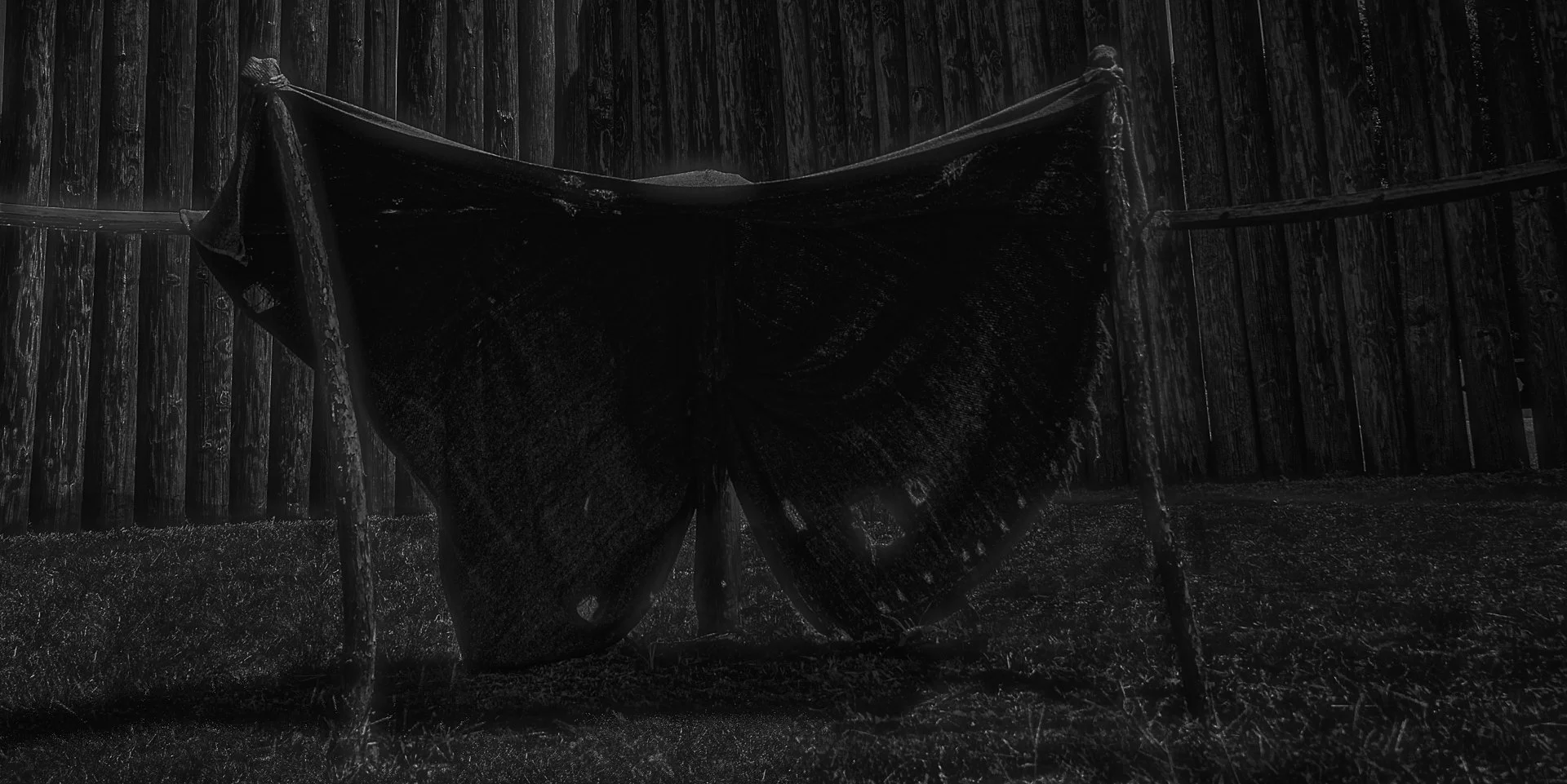
On the Deadline
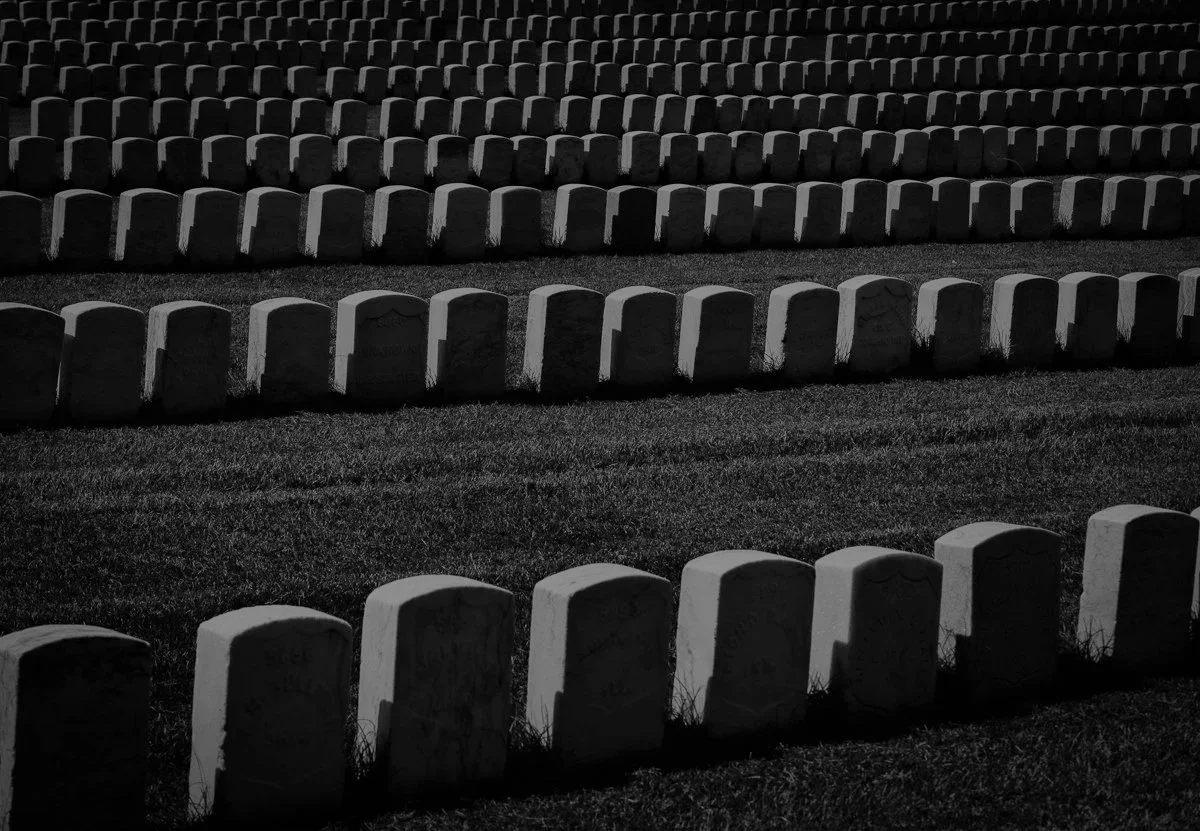
"The Infinite Dead"